
Politics · Developing story
No lead detected in Iowa air after Army's detonation, EPA says
NewsAgo briefing
The clear picture
What happened
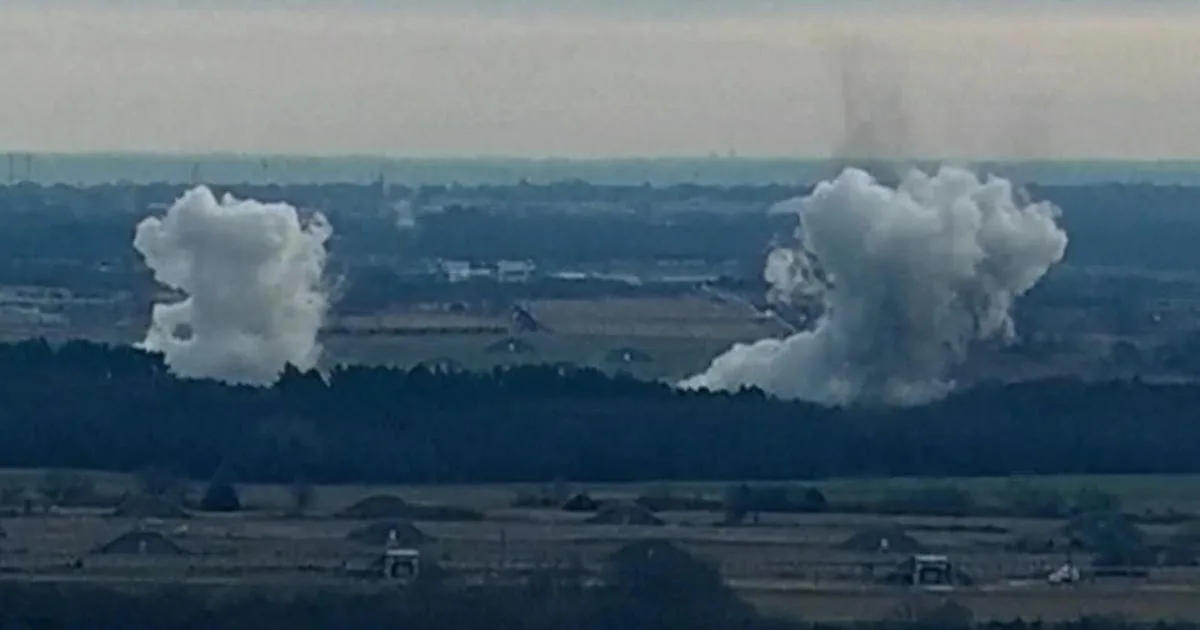
On Wednesday, the Army carried out a controlled detonation of nearly five tons of lead explosive material at an Iowa site. CBS News says EPA instruments found no lead in nearby air afterward. The Hill says federal officials lifted Middletown’s shelter-in-place order.
Latest development
CBS News reports that EPA detected no lead in air near the Iowa blast site after the detonation.
Why it matters
With the Middletown order lifted, residents were no longer under the federal shelter precaution. Grist says officials are still testing southeastern Iowa for contamination, so the available EPA finding is limited to airborne lead near the blast site.
Known / unclear
No lead has been detected in the air near the Army's controlled blast site in Iowa, where they detonated nearly five tons of lead explosives on Wednesday, according to the Environmental Protection Agency.
The supplied accounts do not establish whether soil, water, or locations farther from the blast site contain contamination, or when southeastern Iowa testing will be complete.
NewsAgo wrote this briefing with an AI language model, using only the attributed reports listed below. Automated checks require every point to cite one of those reports and reject generic or unsupported text. How we use AI
Sources
Compiled from 6 independent publishers CBS News · The Hill · PBS NewsHour · The Verge · Al Jazeera · Grist
CBS News emphasises “No lead detected in Iowa air after Army's detonation, EPA says”; The Hill leads with “Shelter-in-place order lifted after Iowa lead azide detonation”.
- CBS NewsNo lead detected in Iowa air after Army's detonation, EPA says ↗
- The HillShelter-in-place order lifted after Iowa lead azide detonation ↗
- CBS NewsEPA detects no lead in air shortly after toxic Iowa chemical detonation ↗
- PBS NewsHourWATCH: Vance defends Iowa lead azide detonation as he visits Air Force troops in Ohio ↗
- PBS NewsHourWhat the Army's Iowa detonation means for nearby communities ↗
- The HillLive updates: Army calls Iowa detonation ‘successful’; Thanksgiving storm delays Macy’s parade ↗
- The VergeEPA reports ‘zero’ airborne lead following controlled Army detonation in Iowa ↗
- Al JazeeraUS Army declares Iowa lead azide detonation ‘tremendously successful’ ↗
- GristWhat to know about the Army’s lead detonation in Iowa ↗
The big question
Did the detonation leave lead contamination beyond the area covered by EPA’s initial air checks?
The available information does not answer that yet: CBS News reports no lead in air near the site, while Grist says contamination testing in southeastern Iowa continues.
What happens next
- Results of the contamination testing in southeastern Iowa that Grist says officials are continuing.
- Any additional EPA air-monitoring results from the Army’s Iowa controlled-blast site.
Bottom line
The EPA’s no-lead air finding and the lifted Middletown order indicate no documented immediate airborne lead release near the site, but broader contamination remains unresolved while testing continues.
Explore timelines and source history
Developing story: This developing story groups reporting from 6 publishers. The timeline shows how the coverage has changed.
What the coverage shows
Three or more independent publishers are reporting this development. Wording and emphasis may differ; open the source timeline to compare their reporting.
Compare the publisher timeline ↓Story evolution
- Headline updated
No lead has been detected in the air near the Army's controlled blast site in Iowa, where they detonated nearly five tons of lead explosives on Wednesday, according to the Environmental Protection Agency.
4 sources at this update - Headline updated
New reporting from The Hill: Shelter-in-place order lifted after Iowa lead azide detonation.
4 sources at this update - Headline updated
Two quick blasts destroyed nearly 5 tons of unstable lead azide. Early monitoring detected no airborne lead, but officials are still testing southeastern Iowa for contamination.
1 source at this update